The Cover Story · Nº1 · July 2026 · 4 min
1992, or the Year the Party Grew Up
By The Cover Desk · Partner Features →
A THC drink that dresses like a mixtape and talks like a toast — the first real brand on this floor, photographed with its own cans in its own night. Partner feature; relationship printed below.
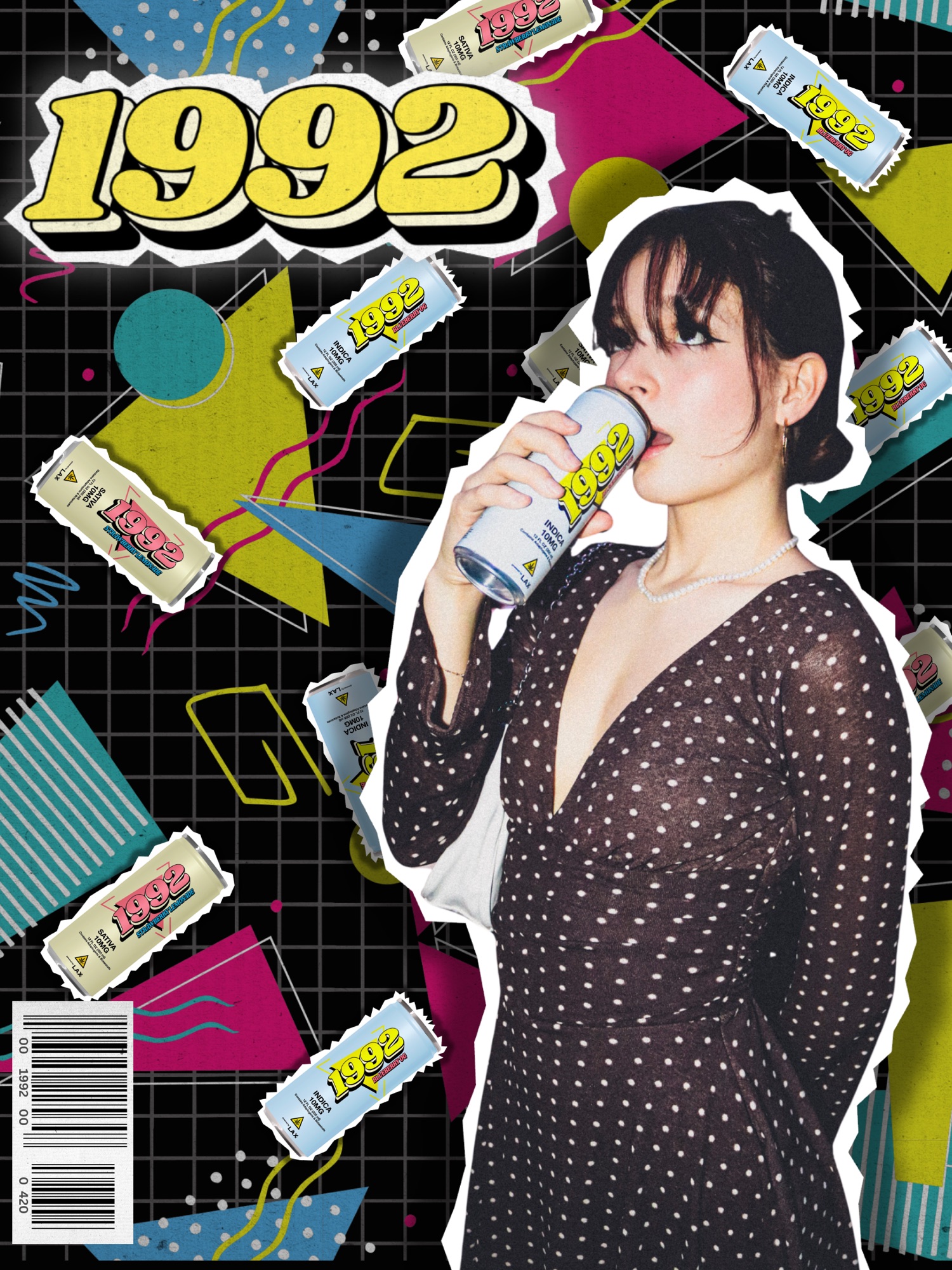
Cover, as supplied by the house — the cans wear the year.
Every so often the category produces an object that already knows what it is. The cans on this week's cover — torn-paper labels, a puff-print year, a grid that looks stolen from the back of a Trapper Keeper — belong to 1992, a THC-infused beverage from the house of Legacy, Inc, and they are the first real products ever photographed for this floor.
We should say that plainly, because this floor is famously fictional. Our houses are invented; our lots are specimens; our checkout is a concept. 1992 is none of those things. It is a real drink, made by real people we actually work with, and the Cover Story exists precisely so the real ones can visit without the fiction pretending otherwise.
The year as a brand
Naming a product after a year is vintage logic — wine does it, watch collectors do it, reissue sneakers do it. Picking 1992 specifically is a cultural claim: the year the party still knew everyone's name. The house's own catalog opens with it — “There was a time when getting together felt simple. When drinks were about connection, not excess.” That is not effect copy; that is a thesis about evenings, and the whole brand hangs off it.
Two wardrobes, one voice
What convinced us 1992 belongs on a cover is that it dresses in two registers without losing itself. The catalog speaks in cream pages and quiet grotesque — “Built for connection. Designed for presence.” The cans scream in Memphis shapes, torn paper, and barcode jokes (scan the cover: the code reads 1992, then 0420). Editorial restraint and party loudness, same voice at two volumes — which is, not coincidentally, the exact trick this store has been practicing with its own name.
The objects
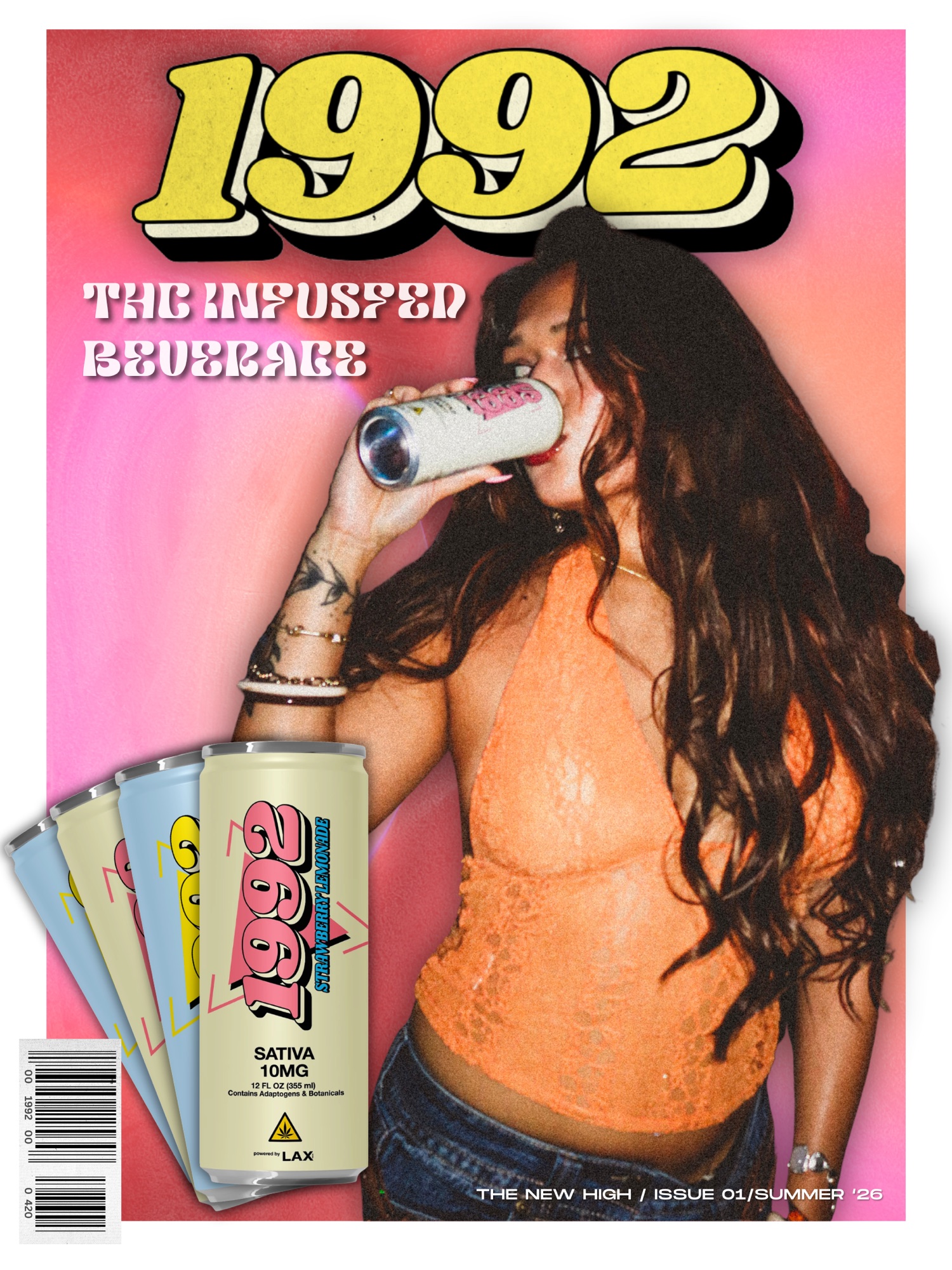
Two cans sat for the cover. BLUEBERRY OG, the indica, in powder blue; STRAWBERRY LEMONADE, the sativa, in cream and pink — ten milligrams each, twelve fluid ounces, adaptogens and botanicals in the tank, “powered by LAX” printed at the foot like an engine badge. Stated contents, stated dose, a label you can read from across the room. We describe; the cans claim nothing here they don't claim on their own metal.
Why a drink, why now
The beverage is the category's most legible object — no grinder, no apparatus, no initiation. It passes the roommate test and the rooftop test. A floor like ours, obsessed with flower as authored work, needs the counter-argument in the room: the format built for the person who wants the evening, not the hobby. 1992 is that argument wearing a very good outfit.
What we take from it
From the archive house we learned a world survives a vault. From 1992 we take the adjacent lesson: a year can be a place, and a drink can be the ticket there. The first real brand on this floor sets the bar for every one that follows — come with your own world, your own paper, your own night. The door is editorial, the relationship is printed, and the admiration, as always, is ours.
The relationship
Disclosure, printed as loudly as the admiration: 1992 is a Legacy, Inc brand and a client of the studio behind BOOF. The Brand-of-the-Week column stays independent and unaffiliated by charter; the Cover Story is the opposite instrument — a partner feature, and it says so. Their imagery appears here with permission. Nothing on this page is for sale on this floor.
Letters to the desk
none printed yetNothing printed on this piece yet — the section stands anyway, so you know where letters land. The desk reads everything sent.